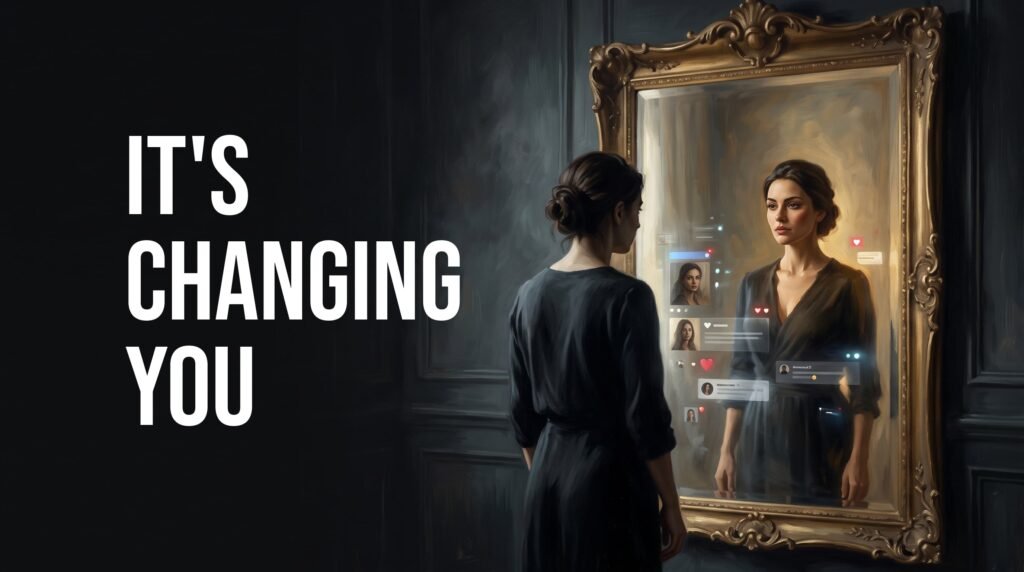
In today’s hyper-connected world, almost everyone maintains a carefully curated online presence, but few realize how a manufactured digital persona can slowly erode their true identity. What starts as a harmless filter, an edited photo, or a carefully crafted status update gradually morphs into a daily performance you feel obligated to maintain. Over time, the line between who you are and who you pretend to be online begins to blur.
We naturally post our best moments, our most articulate thoughts, and our most attractive highlights. However, when the avatar on the screen receives more praise, attention, and affection than your quiet, messy real self, a dangerous psychological shift occurs.
The Psychology Behind the Curated Avatar
Social media platforms are engineered to capitalize on our fundamental need for human connection and validation. According to insights from the Pew Research Center, digital feedback loops like likes, retweets, and comments trigger instant neurochemical rewards, conditioning us to repeat behaviors that generate public approval.
Why Your Digital Persona Takes Over
When your ideal online persona receives more positive reinforcement than your everyday real self, your brain naturally prioritizes the online version. You start modifying your speech, aesthetics, and even personal opinions to conform to what your digital audience expects.
“We wear masks to survive the public eye, but stay in them so long that we forget the true face underneath.”
This subtle substitution leads to a profound psychological paradox. The higher you build your online alter-ego, the more intimidating it becomes to live authentically in the real world. If you have ever felt paralyzed by the gap between your public facade and your private reality, you might understand why your potential is keeping you stuck rather than propelling you forward.
The Hidden Costs of Digital Erasure
The gradual replacement of your real identity by an online character doesn’t happen all at once. It is a slow, quiet process with significant consequences for your mental wellbeing:
- Erosion of Authentic Connection: Relationships become transactional, curated around shared aesthetics or online prestige rather than vulnerability.
- Constant Performance Fatigue: Maintaining a flawless persona requires constant cognitive energy, leading to chronic emotional exhaustion.
- Identity Dysmorphia: Real life begins to feel drab or inadequate when compared to heavily filtered photos and highlight reels.
This experience isn’t limited to younger digital natives either. A closer look at the psychology of Gen Xers demonstrates that adults who grew up long before smartphones are equally susceptible to digital self-editing and online identity shifts.

How to Reclaim Your Authentic Self
Reconnecting with your true self does not require deleting every social profile or moving to a cabin in the woods. Instead, it requires setting firm boundaries between performance and genuine existence.
One powerful remedy is engaging in personal creative practices that require zero audience participation or digital approval. This reflects the core concept of what art does for the soul when created purely for inner reflection rather than social metrics.
- Practice Digital Fasting: Schedule regular hours each day where your devices are completely out of sight.
- Post Without Chasing Metrics: Share moments because they hold personal significance, not because they fit a social media algorithm.
- Embrace Uncurated Realities: Allow yourself to experience moments quietly without documenting or publishing them for public view.
Conclusion
Your online identity is merely a projection engineered for a screen. Do not let the digital illusion eclipse your authentic life. By stepping away from the stream of validation, embracing your flaws, and honoring who you are when nobody is watching, you reclaim ownership of your real self.